Ernest Osogbue.
It is gratifying to note that the Court of Arbitration for Sports, CAS, has acknowledged receipt of the Senegalese appeal over the striping of the Teranga Lions as the 2025 Africa Cup of Nations, AFCON, champions. The CAS Director General, Matthieu Reeb, recently told newsmen that the organization was in possession of the Senegalese appeal against the CAF Appeals Board decision. According to Reeb, the matter was complicated, but the CAS would do its best to ensure that all parties received fair hearing, as CAS intends to resolve the matter as soon as possible.
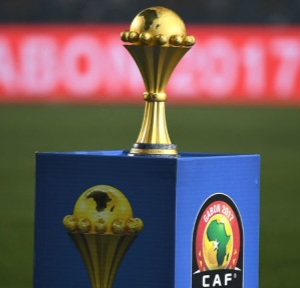
You will recall, that the recent CAF Appeals Board ruling, installing Morocco as the champions of the 2025 AFCON, after stripping Senegal of the title, has received mostly negative comments from around the world. Most people had been stunned to hear of the ruling, two months after Senegal lifted the trophy in a controversial, but widely viewed AFCON final, at the Prince Moulay Abdallah Stadium in Rabat, Morocco. The Senegalese players had walked off the pitch, claiming biased officiating, after a penalty kick was awarded to Morocco in the dying minutes of the match. It took the intervention of Senegalese captain, Sadio Mane, and other officials working behind the scenes, to get the Senegalese players back on the field of play. Ironically, when the game resumed, Morocco lost the penalty, leaving the match in a stalemate, which was only settled in extra time when Senegal scored the only goal to win the match.
It begs the question, therefore, why the Senegalese players felt it necessary to abandon the match in the first instance. The decision clearly demontrated the naivety of the Senegalese coach, Pape Thiaw, who exuberantly led his players off the pitch due to immaturity. The award of a penalty kick does not automatically mean that a game has been won or lost. It becomes important to emphasize the point, therefore, that until the final whistle, a football match is still very much alive. The Senegalese players blatantly left the pitch in protest over the penalty, with the whole world watching the AFCON final, while football bigwigs from around the globe were physically present at the stadium. At the end, the penalty was missed. This was a demonstration of outright irresponsibility on the part of Senegal, and the action is capable of bringing the game to disrepute. Under no circumstances should a team abandon a football match, how much more the showpiece game of a continental championship.
Similarly, however, Moroccan authorities couldn’t control their supporters. From all indications, and from most of the reports that came out of the entire championship, Morocco’s intention was to host and win the AFCON. As a result of this desire, the authorities and officials forgot their primary responsibility to their guests. By African traditions, the successful hosting of a championship, does not begin and end with victory on the field of play, but rather, from the host country being hospitable, fair, accommodating, and responsible for the well-being of all visiting teams. That is the hallmark of a good host. Wanting to win at all costs, by employing underhand tactics, deploying laser beams to blind opponents, and sending ball boys to steal the towels of opposing team goalkeepers, is definitely not the way to successfully host a continental championship. Moroccan authorities must therefore, do a proper soul-searching, and recalibrate their priorities, especially in the lead up to co-hosting the 2030 FIFA World Cup alongside Spain and Portugal.
Following the recent CAF ruling, several football stakeholders, from around the world have spoken against the CAF Appeals Board ruling. According to them, the ruling was misguided, and reflected a wrong interpretation of CAF competition rules. Former World Footballer of the year and ex-Liberian president, George Weah, called the ruling a damaging blow to the reputation of African football. In Weah’s view, the sanctity of the on-field decisions of football officials must remain sacrosanct, and must not be subjected to manipulations in the boardroom. Claude Le Roy, a former Senegalese national team manager, said the ruling was absurd, and a disgrace. According to him, the decision was a product of shady dealings at the top echelons of CAF. Other football stars to condemn the CAF decision, include Wayne Rooney, Didier Drogba, Hossam Hassan, William Troost-Ekong, Asisat Oshoala, Patrice Evra, Samuel Eto’o, and many others.
On the grounds that the decisions of the referee must be free from post-game interference, it is relevant to note that match officials are human, and could be subject to errors. This makes It imperative that when blatant errors which could bring the beautiful game to disrepute are made, football authorities must of necessity rise up to correct such errors. In recent years, matches have been replayed after a careful review of the circumstances of officiating. Player dismissals by the issuance of red cards, as well as the cautionary yellow card, have equally been subjected to review, and when found to be incorrect, have been promptly rescinded by football authorities. On-field decisions must remain sacrosanct, only to the extent that they remain fair to all parties. It becomes necessary for us to note, therefore, that because we do not like a decision, does not make it the wrong decision. The CAF decision may not be popular, but it was based on extant rules, whether those rules were correctly interpreted or not is what the CAS, as the final arbiter, will let us know.
As we await the CAS ruling, therefore, it become necessary to call for caution and restraint from all stakeholders. The recent parade of the AFCON title, by Senegal, after filing a protest at the CAS, is disrespectful and prejudicial to say the least. It is important that all parties show respect to the procedures and laid down rules of engagement. It would be unfair and prejudicial to the outcome of the ruling if stakeholders continue to issue incendiary statements and continue to act contrary to diplomatic nous. We must remember that football is a game of rules, and when the rules are infringed, fouls are usually awarded. It is therefore, very important that all parties to the case, and those who are interested in the outcome, refrain from making incendiary statements, as well as casting aspersions on the integrity of any of the parties involved. What this whole saga has shown, however, is that African football has come of age. The reactions to the CAF ruling from far and near, is a clear demonstration that African football is making global impact. The CAS ruling on the matter has a duty, therefore, to either set a precedent for future reference, or reinforce the notion that on-field decisions must remain sacrosanct. Let us therefore resolve to abide by the CAS ruling when it is given, and desist from using negative comments in respect to any of the parties involved, knowing that at the end of the day, African football would be the winner.