Ernest Osogbue.
Afrobeats as a music genre is a recent mode of musical expression developed by young Nigerian musicians, as a way of expressing their understanding of today’s musical culture. Much like how rap music developed in the US, in the late 1970’s and early 1980’s, as an offshoot of jazz and street music, Afrobeats owes its emergence to the musical foundations laid by legendary giants of African music. It has value in the sense that just like rap music, it is a mode of expression for the young generation of African musicians, as it incorporates street lingo and other nuances to express the feelings of the young, and their understanding of contemporary issues.
For the records, no musical genre can lay claim to being birthed by a single musical form, as a result, every musical genre owes itself to a mishmash of various musical expressions, tried and tested over time, until it finds its bearing and becomes accepted as a musical form. Afrobeats, therefore, can not be isolated from this background. Before the advent of Fela Anikulapo-Kuti, the father of modern day Afrobeats, there were already various forms of musical expressions on the African continent. Musical forms, such as Highlife, juju, apala, jazz, and various other forms of uncategorized African traditional music. These musical forms already held sway and formed the soundtrack to both sad and joyful events in various parts of the continent.
In Central Africa, there was the musical form known as the Congolese Rhumba, pioneered by the likes of Franco Luambo, Tabu Ley, Papa Wemba, and a host of others. This Central African musical genre spread across the continent at one time, and was an integral part of many social engagements. Manu Dibango polished it up in later years, and took it to another level, by exporting it to France, before it gained global attention, when Michael Jackson settled a legal dispute out of court, with Dibango, over the copyright ownership of the “mama makosa” refrain, in Jackson’s hit song, “Wannabe startin’ sometin,” a song off Jackson’s 1982 blockbuster album; Thriller. Today, the Congolese Rhumba has more or less morphed into what is popularly called Makossa or Soukous, or better still, Soukous-Makossa.
In West Africa, on the other hand, Highlife music held sway, with its blend of African traditional music, jazz, Afro-Cuban Calypso, and Nigerian juju music. ET Mensah, EK Nyame, George Darko, Reggie Rockstone, and many others were the early pioneers in Ghana. In Nigeria, Bobby Benson, Victor Olaiya, Cardinal Rex Jim Lawson, Celestine Ukwu, Charles Iwegbue, were some of its early exponents. This brand of music continued to metamorphose, until the influence of European and American music infused itself into the Nigerian musical culture, with the coming on stream of young college educated singers like Oby Onyeoha, Amas Grill, Kris Okotie, Jide Obi, Terry Mackson, and a host of others. At this time, Fela Anikulapo-Kuti, was still experimenting with his rebel, political, and non-conformist brand of music, known as Afrobeat, which leaned towards heavy rhythmic bass accompaniments, laced with jazz flavored wind instruments; trumpets, saxophones, and trombones. These different brands of music continued to evolve side by side. At this time, it was socially unacceptable for a young Nigerian musician to sing in pidgin English, as a result, Alex O, Felix Lebarty, Chris Mba, and others, continued to build on the European/American brand of Pop/R&B music foundations, as laid down by Oby Onyeoha, Chris Okotie and Co.
At this juncture, the influence of Jamaican Reggae music also came to bear on the Nigerian music scene. Singers like Eric Donaldson, U-Roy, I-Roy, Dillinger, Burning Spear, Max Romeo, Yellowman, Gregory Isaacs, the legendary Bob Marley and Wailers, and many others, brought the Jamaican tradition and Rastafarian culture of dreadlocks and ganja smoking to Nigerian music. Majek Fashek, Ras Kimono, Orits Wiliki, Andy Shurman, Evi-Edna Ogholi, The Mandators, followed in the footsteps of popular Ivorien singer Alpha Blondie, by dovetailing towards the heavier brand of Reggae, known as Roots Reggae, which focused on serious issues of spirituality, politics, and suffering. With Alex Zitto, Danny Wilson, Blackie, and others, doing what came to be known as ‘Dancehall,’ a softer version of Reggae music, which focused on love and everyday issues. These singers found their spaces within the Nigerian musical firmament, as each musician, and musical genre, tried to outdo the other. It was indeed a time of musical metamorphosis and experimentation, in the evolution of Nigerian music.
It was in 1989, however, that a seismic shift came on to the Nigerian music scene, albeit, unheralded. Before this time, young Nigerian musicians sang mostly in the English Language; as we said earlier, due to several reasons. with older musicians, singing in their native tongues. The music of older musicians, therefore, never made it to the clubs, but remained on the periphery, and was generally referred to as ‘local’ music. Only foreign music and Nigerian music produced in the English language, was accepted as good music by young people. Bright Chimezie, even captured the phenomenon in his 1980 musical hit; Okoro Junior. Fela was the only musician, who due to his Yabbis tradition, and popular acceptance as the voice of the masses, was exempted from this unofficial rule. He was therefore, able to introduce pidgin English, and Yoruba, to his music. Good English grammar was the mark of sophistication, in this era, and so, singing in the English language, helped to elevate the musician and his craft. Also, the clamor for education was at its peak during this period. In order to show themselves as being educated and sophisticated, therefore, young musicians wrote their songs, and sang mostly in the English language. In 1989, however, Mike Okri, either by design, or by accident, broke this trend, when he released the song ‘Omoge,’ off his debut album, Concert Fever. The song received wide acceptance across Nigeria. It was a big hit on radio, and the rhythmic flow was dance inducing, making it a success at the clubs, and at social gatherings. The theme of the song was another matter entirely, as it told a very relatable story in the Nigeria of that time. The song marked the first time a young singer was bold enough to blend the English language, pidgin English, Yoruba, and Urhobo languages, into one song. Though, it took some time to register, the era of code mixing and code switching, had begun in Nigerian music. While the songs of Alex O, and the like, was only enjoyed by young people at the time, singing in pidgin English, and code mixing Yoruba and other Nigerian languages, expanded the audience base of Nigerian singers, by pulling in both the young and the old, as everyone could understand and relate with the themes and subjects of the songs. After the early resistance against pidgin English as a musical language, it slowly and gradually became the mainstay of Nigerian music, so much so, that if there is no infusion of pidgin and street nuances to your music in Nigeria today, it would be difficult for it to make an impact.
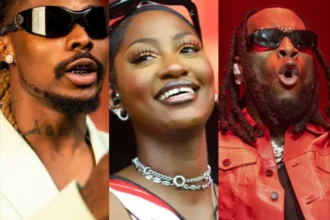
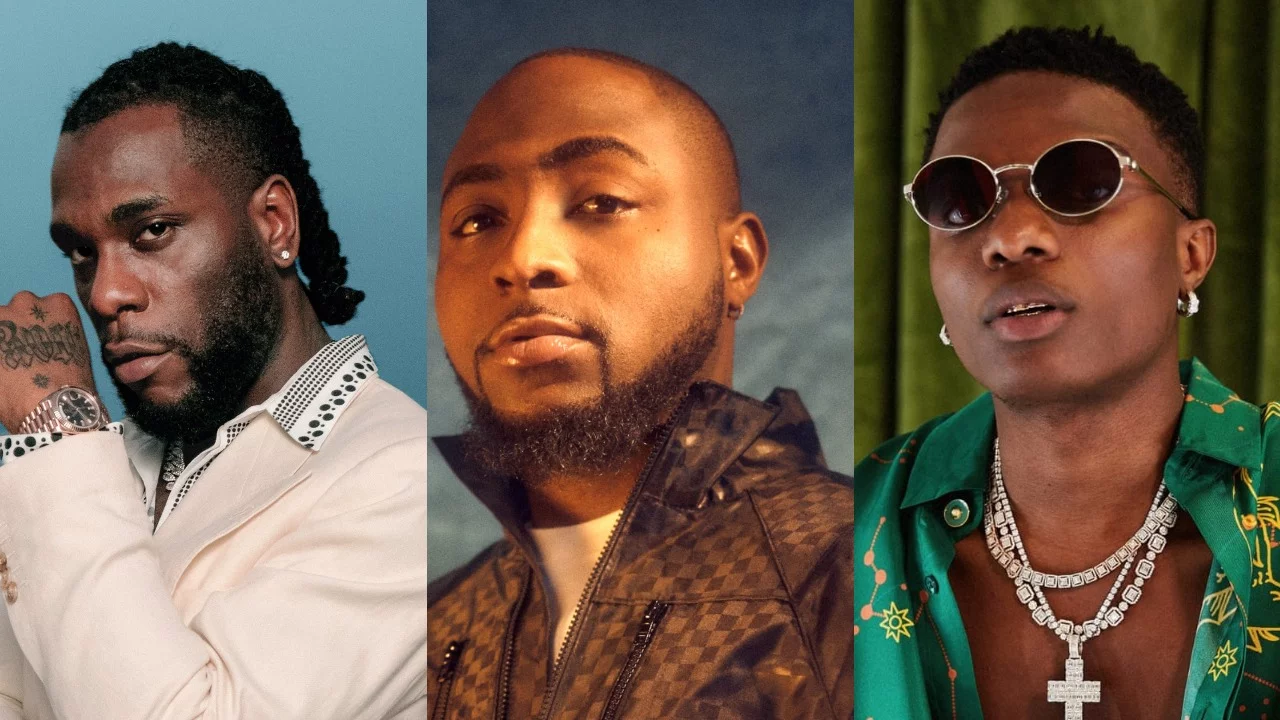
Somewhere along the lines, however, Nigerians arrived at a musical confluence, where the pidgin English of the streets, came to meet the softer version of Fela’s rebel music, with an infusion of traditional aspects of Nigerian music, like Juju, Apala, and Highlife, this modern version of music, is what is widely known today as Afrobeats. This is the brand of Nigerian music now recognized globally, as espoused by the likes of 9ice, Wizkid, Burna Boy, Davido, Tiwa Savage, Asake, and many others. In 2019, When Burna Boy’s very successful album, African Giant, was nominated for a Grammy Award, there was wild excitement across Nigeria, on the grounds that finally, contemporary Nigerian music was receiving global appreciation. As a fallout of this, global music stars, flocked to seek collaborations with Nigerian musicians. Such musical stars as Beyonce, Rick Ross, Madonna, Celina Gomez, Drake, Justin Bieber, Chris Brown, Ed Sheeran, and several others sought to be identified with Nigerian singers on different projects. This marked the beginning of the golden era of Nigerian music. In 2021, after bringing Diddy on, as Executive Producer, on his album, Twice as Tall, Burna Boy, finally won the Grammy award. Since that time, the craze for the Grammy Awards by Nigerian musicians has risen to fever pitch. Subsequent wins by Wizkid, and Tems, collectively, individually, and in collaboration with others, alongside numerous nominations scored by several other Nigerian singers, only served to rev up the desire for the Grammy Awards by Nigerians to an unprecedented crescendo. The desire for the Grammy Award in Nigeria, is now so high, that the award has become as popular in Nigeria, and almost generates more publicity here than it actually does in the US. As a result, Nigerians expect their musicians to win every African music award category at the Grammy Awards. When South African singer, Tyla, won the Grammy Award in 2026, to mark her second win in three years, with Nigerian Afrobeats giants like Davido, Burna Boy, Asake, Wizkid, Omah Lay, and others, left grabbing at straws, questions begin to be asked, as to what criteria the Americans were applying.
First and foremost, Nigerians must understand that the Grammy Awards, despite its global appeal, is an American award. It is not a global award, but strictly an American award. As a result, only the Americans can determine what criteria is required to win the award. Secondly, the Grammy Award, is not strictly an award for excellence, it has political, social, and colonial undertones. It is sometimes used as a neocolonial instrument of coercion and influence peddling. Africans need to understand that music, social media, films, books and other intellectual materials, are instruments of cultural colonization, used by the Americans, and Europeans, to capture the hearts and minds of young people across the world. America is usually depicted in these spaces, as an all conquering heaven on earth, which induces young people to fall in lovewith that country. This is evident in Nigeria, where you find many young people who love and cherish America more than Nigeria, despite their never having traveled beyond their villages. At another level, however, a careful study of social developments in the world, and in the US in particular, would reveal that Americans are non-conformists. Americans do not conform to anything that didn’t originate from America. The only way for them to accept anything that didn’t originate from America, is to bend that thing to American rules. For example, the Americans rejected British English, by bending it to American English, they bent football to Soccer, and created their own brand of football. They mostly rejected orthodox Christianity, and created Pentecostal Christianity. If you check through history, you’ll discover that the Americans always adapt whatever they come in contact with, and bend it to suit American ways. In clothes, food, dressing, attitude, and whatever else you wish to talk about, Americans have a superiority complex, and so, would only accept anything that bends to American rules.
This is the same agenda they have towards Afrobeats. From all indications, Tyla, doesn’t sing or perform Afrobeats in the classical sense. Her music is more akin to the Pop/R&B music of Alex O, Oby Onyeoha, Tina Onwudiwe, and the like, which is more like the African version of what the Americans sing. Her music doesn’t tick the boxes in terms of the ingredients of Afrobeats; code mixing, code switching, street lingo, pidgin English usage, etc. Her music is apolitical and and dwells more on love, beauty, and other issues related to what Beyonce, Mariah Carey, Rihanna, etc., would sing about. It becomes clear, therefore, that in their typical neocolonial tactic, the Americans are subtly telling Nigerian singers to sing more like Americans, by abandoning code mixing, and code switching, abandon the infusion of street lingo, and the discussion of contemporary African issues, if they want to win the Grammy Award. On the other hand, like Burna Boy, Nigerian musicians, are subtly being goaded to play the Grammy Awards politics, by hiring American producers, or promoters, to help promote their music in the US. This would enable them to gain more traction in that country.
This is the neocolonialist’s playbook, and the neocolonialist’s agenda; use subtlety to make people do things your way. A philosophy which the Americans buy into; you either do it our way or you hit the highway. A careful observer, would note that Tyla’s music, which is very good, let’s not forget, is not as popular, or as widely accepted on the African continent as the music of Davido, Burna Boy, Asake, Wizkid, or even Tiwa Savage. Yet, for the Americans, that is the type of African music they like, and that is the type of African music they wish to promote. I usually feel sorry for Davido and the rest, when they mourn after losing at the Grammy Awards. They need to understand that the Grammy Award is not a measure of how good your music is. At best, it is only a measure of how much your music is accepted in the US, and nothing more.
The ball is therefore, in the court of Nigerian singers, if they wish to win the Grammy Award, they must either dilute their sound to suit the American audience, or play the Grammy Award politics, by having an American producer, or promoter to help them in America. If they however, wish to keep satisfying their African base, by maintaining their original sound, and as well remain relevant within the continent, then, they must accept that they may not win the Grammy Award for now. Africans need to create their own music awards, which would be cherished by the continent. An award that would separate the different genres of African music, reflecting Afica’s diverse tastes in music. It is not enough to lump all genres of African music into one award category, like the Americans do. Africa has a diverse tapestry of sounds, and this diversity must be reflected in diverse award categories.