Ernest Osogbue.
When I learned that the Ghana Football Association, GFA, has sacked Otto Addo, as manager of the Black Stars, I laughed in Okitipupa language. With only a few months to the 2026 FIFA World Cup, there is no doubt in my mind that a new coach would have his work cut out for him. My laugh was not because the situation was funny, but because this was a familiar path that had been threaded by my country, Nigeria, in the past, with no tangible results or benefits.
It has become a familiar pattern for African countries to panic on the eve of the FIFA World Cup, or even the Africa Cup of Nations, and then suddenly kick out the coaches, and or managers, who had put in sweat and blood, to qualify them for the championship. This is usually done over lame excuses and frivolous reasons. The situation is sometimes compounded by representatives of European coaches, who hover around the fooball associations, brandishing the long CV’s of these coaches, in the hopes of landing the coveted job. I understand that bribes, and commissions are usually paid, especially if your European candidate emerges the winner. Doing well with the team, or improving the country’s football fortunes is usually not on the agenda.
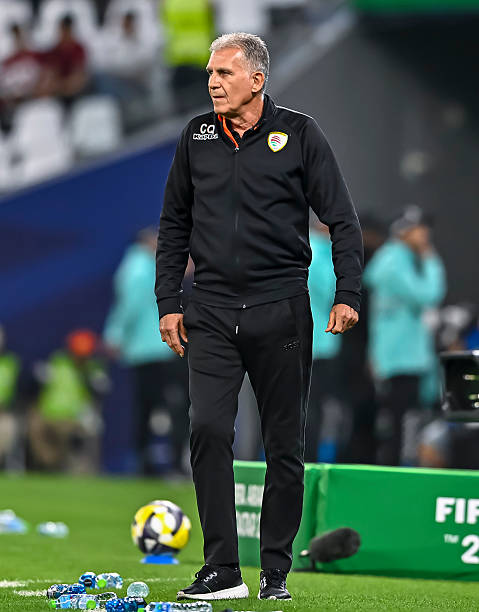
The case of Nigeria over the years, is a clear and present example of how not to sack coaches or managers, before a major championship, and also how not to employ European coaches, who only come for the money. As a result, when I received the news of the hiring of Portuguese coach, Carlos Queiroz, by the GFA, to replace Addo in the Black Stars dugout, I sighed in disappointment. Knowing that this was a familiar path that would lead to nowhere. To be fair to the GFA, Addo has not covered himself in glory in recent times. Despite qualifying for the 2026 World Cup, Ghanaians were forced to watch helplessly on television, as the cream of African national football teams displayed their craft in Morocco, during the 2025 Africa Cup of Nations, without the Black Stars, having not qualified for the championship. In the last few weeks as well, the Black Stars have crumbled to the opposition in friendly games; a 2-nil loss to Japan, was followed by a 1-0 loss, to South Korea. The worst happened, when the Black Stars were humbled 5-1, by Austria, and the straw that broke the camels back, was the most recent 2-1 loss to the almighty German machine. The GFA could not take it anymore, and therefore, sent Coach Otto Addo packing. In all, Addo oversaw 22 matches in this his second coming, winning 8, drawing 5, and suffering 9 losses. Not a very inspiring record, I must say.
Despite this depressing record, however, it becomes obvious, that firing a coach 72 days to a major championship like the World Cup, is a recipe for disaster. These European coaches, who swoop in to take over, are only interested in the money, and the fact that their CV’s would be further enriched, with having taken an African team to the World Cup. They know nothing about the team, the football traditions of the country, and usually look lost on the touchline, as they have no connection with the players during matches.
Take the case of Nigeria at the 1998 World Cup in France, as an example. The young French coach Phillipe Troussier, had worked his socks off to build on the legacies of Clemens Westerhof, and Johannes Bonfrere, both of whom had taken Nigerian football to unprecedented heights during their time. However, in the perception of certain interest groups within Nigerian football, Troussier, who had qualified Nigeria for France 98, was not good enough. Negative stories in the media, and other forms of harassment, were employed against the man, until everything came to a head, and he had to leave before the World Cup. Step in Bora Milutinovic, the itinerant Serbian, a world cup coaching veteran, to save the day. Unfortunately, things did not go according to plan. Milutinovic left no tangible legacies in Nigerian football, and until date, no one knows how his tenure ended. After a good first round World Cup performance, which left the Super Eagles, dreaming of playing Brazil in the round of 16, the Super Eagles were handed a 4-1 humiliation, by a rampaging Denmark, leaving the Super Eagles in tatters, which took many years to repair. In 2002, history was to repeat itself again, when Amodu Shuaibu, alongside his assistants, Stephen Keshi, and Joe Erico, were booted out, after securing Nigeria a place in Korea/Japan 2002. Along with the coaches, several Super Eagles players, deemed too big for their pants, were discarded by the football authorities, and Chief Festus Onigbinde, was left to huff and puff with the Eagles, as the team limped out of the World Cup with only a point, after losing two and drawing one of the three group matches.
In 2010, there was another shake up, just before Africa was to host its first FIFA World Cup in South Africa. The unfortunate Amodu Shuaibu, was to taste the bitter pill again, as he was denied the opportunity to lead the Super Eagles to the World Cup for a second time, after battling to qualify the team. Tunisia were leading the CAF group B of the qualifiers, until the last match day, where Tunisia was away to Mozambique, with Nigeria, away to Kenya, at the Kasarani Stadium in Nairobi. Mozambique kept their promise to Nigeria, by beating Tunisia. In Nairobi, a 65th minute strike by Yakubu Aiyegbeni, was sandwiched by a 63rd, and 83rd minute strikes by Obafemi Martins, to give Nigeria a comeback 3-2 victory, that catapulted the Super Eagles above the Carthage Eagles of Tunisia.
The Swede, Lars Lagerback, beat his countryman, Sven-Goran Eriksson, Bruno Metsu, and Glenn Hoddle, to land the Nigerian job, and lead the Super Eagles to South Africa. It was another lackluster performance by the team. Just as in 2002, the team lost the first game 1-0 to Argentina, the second game 2-1 to Greece, before being held to a 2-2 draw by South Korea, to crash out infamously. As with the Serbian, Bora Milutinovic, no tangible legacies can be ascribed to Lars Lagerback in his stint with the Super Eagles. From the off, the man was uncomfortable with the team, the country, and with everything to do with managing an African side, it was like he couldn’t wait to run away after collecting his booty along with his accomplices.
Fast forward to 2021, and it was another dèjà vu moment, when Gernot Rohr, the German tactician who had guided Nigeria to the 2018 World Cup in Russia, and decent performances at the previous AFCON, was given the boot on the eve of the 2021 AFCON, which was delayed to 2022, due to Covid-19. Jump in Austin Eguavoen, who took the team by storm. A 100% percent record in the group stages, after beating almighty Egypt, with Mo Salah, 1-0, in the opening game, a further 3-1 victory over Sudan, and a 2-0 shut out, against Guinea Bissau, in the final group game, deceived Nigerians that they had found a Messiah in Eguavoen. Tunisia, who barely scrapped to qualify for the second round, exposed the frailities in the Super Eagles, with an embarrassing 1-0 upset, in the second round. Eguavoen’s final assignment, however, was the final leg of the 2022 World Cup qualifier against Ghana. He managed a goalless draw in Accra, but a 1-1 stalemate in Abuja, in the return leg, sealed Nigeria’s fate, on the CAF away goals rule, to send the Eagles crashing out of qualification for the World Cup.
It becomes obvious, therefore, that relieving coaches of their jobs for whatsoever reasons before a major championship, has not favored Nigeria. It is therefore, surprising that the GFA, has chosen to sack Otto Addo, just weeks before the opening game of the 2026 World Cup, and not only that, they have chosen Carlos Queiroz, a Portuguese, to lead them to the Mundial. From Nigeria’s experience, I can comfortably inform the GFA, and my brother and sister Ghanaians, that nothing will come out of this marriage. Queiroz is in this for the money, and the notch on his CV. At the end of the day, Ghanaian football would be worse off than before Queiroz arrived. Impatience would never lead African football to the promised land. I beg to rest my case!