Cally Ikpe, Ph.D.
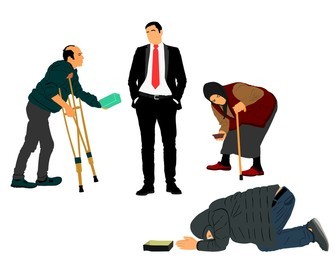
For most of human history, the divide between the haves and the have-nots has been treated as an unchangeable law of nature—a relentless race for survival where basic needs keep the majority tethered to the few. Yet humanity’s oldest ambition is finally within reach: a tangible “heaven on earth” built not on mysticism, but on total economic liberation. As technology ushers in an era of unprecedented abundance and the mastery of knowledge, scarcity-driven servitude is nearing its end—and those who profit from human desperation are already preparing to fight it.
Since our origins, survival has dictated human behaviour. The imperative to secure food, shelter, and safety forced us to navigate a world of scarcity, conditioning us to accept rigid institutional structures, institutionalized inequality, and systemic servitude. This dependency created a profound power imbalance. The fear of deprivation—of shame, hunger, and death—erected a pantheon of mortal gods: those who control the means of livelihood. Around them gathered spiritual brokers, charlatans, and political elites, all feeding off the promise of a better life. Power became centralized not by merit, but by a monopoly over resources.
The Emerging Paradigm
We are witnessing a monumental technological threshold. Innovations that once seemed miraculous are now mundane. Telecommunications, once reserved for the privileged, now instantly link billions across the globe, while remote surgical interventions and virtual cultural gatherings span continents seamlessly.
Yet, these are merely precursors to the true paradigm shift: the systematic automation of physical and cognitive labour.
With tireless robotic networks and intelligent automation, the baseline costs of existence will collapse. Agriculture, transportation, housing, and clothing will be produced effortlessly and distributed abundantly. As modern visionaries have noted, the traditional concept of money itself may soon become redundant. Advanced manufacturing, robotics, artificial intelligence, and clean energy production point toward a future where machines perform the overwhelming majority of the labour required to sustain human life.
When labour is decoupled from survival, human effort shifts from compulsion to choice. People will work to create, explore, and self-actualize rather than merely to survive.
Historically, the struggle to meet basic needs created a social order in which those who controlled resources, opportunities, and employment acquired influence far beyond what their personal qualities justified. Even religion, which ought to provide spiritual guidance and moral direction, frequently became entangled in this economy of desperation—where the promise of miracles and deliverance gains extraordinary appeal among people perpetually confronted with lack.
What happens, then, when the conditions that fuel such dependence disappear? And how will those who currently monopolize scarce resources reconcile themselves to this emerging reality?
The Collapse of Servitude
Imagine the crowds that constantly line up outside the gates of politicians and oligarchs—begging for contracts, approvals, or basic sustenance—becoming a thing of the past. Deferential servitude cannot survive in an age of universal sufficiency.
Spiritual practices, too, will undergo a transformation. Deprivation has long driven people to seek divine intervention through mandatory sacrifices. Across various faiths—Christianity, Islam, traditional beliefs, and esoteric orders—self-styled gatekeepers frequently demand financial or material investments: seeds, offerings, tithes, first fruits, prayer fees, and sometimes even blood sacrifices. The emerging order will leave this transactional economy with minimal patronage; spiritual exercise will become a personal pursuit of meaning rather than a desperate mechanism for survival.
Similarly, the gambling industry and Ponzi schemes will require total reinvention. Gaming will exist purely for recreation rather than as a desperate attempt to manufacture a fortune.
War, as we know it, will lose its predatory utility. Soldiers will no longer fight to seize scarce resources or loot wealth. Stripped of material gain, systemic conflict unravels.
The Architects of Resistance
Who could possibly oppose a world freed from scarcity and suffering?
The answer: those whose identity, authority, and ego are anchored in the current hierarchy.
To the ruling class, equality feels like a loss of status. The pro-establishment elite, accustomed to the deference of the desperate, dread an order in which they are rendered ordinary. They take gratification not merely in possessing wealth, but in exercising power over those who lack it. For them, a world without suffering is a world without subjects.
Thus, they seek to delay this emerging reality, attempting to preserve the status quo through artificial scarcity, proprietary gatekeeping, and archaic economic models.
Politicians accustomed to adoration because they control access to opportunities will find their corridors emptying. The endless queues of supplicants seeking appointments, contracts, and favours will fade into irrelevance. Public office will lose its attraction once it is stripped of its power to dictate material access. Heads of state, governors, monarchs, religious leaders, and elders will finally be respected rather than feared.
The Ultimate Revolution
All systems move toward their natural conclusion. The current social arrangement—parading stark divisions between the haves and the have-nots—is reaching its structural end.
This shift is the true revolution of human history, one that has been agonizingly slow to arrive. Perhaps the “heaven” promised across ancient texts was never a distant realm beyond the clouds, but a state of existence meant to be realized here on earth through human ingenuity.
The tide of human progress is undeniable. The only remaining question is how quickly those who profit from oppression will come to terms with the inevitable.
_Cally Ikpe, Ph.D. is a broadcast journalist, and Convener, Road to a Vilence-free Nigeria Initiative. Email: cally_ikpe@yahoo.com_