Ernest Osogbue.
The 2026 Commonwealth Games will get underway in a matter of days in Glasgow, Scotland. What most athletes, and most citizens of the Commonwealth do not seem to realize, is that the Games is in big trouble. Behind the scenes, the British government, and the Commonwealth Games Federation CGF, are scrambling to find solutions to a looming problem.
In the not too distant future, the Commonwealth Games, as we know it, may no longer be held, and could disappear, as the challenges of hosting the Games, becomes more and more difficult. In 2022, Durban, South Africa, was supposed to host the Games, but due to the inability of the city to meet certain thresholds, the CGF stripped the city of the hosting rights, and Birmingham city, England, was drafted in as emergency host.
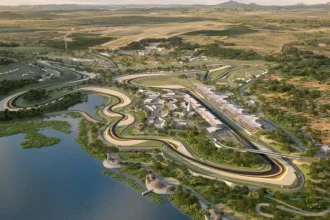
For the current edition in 2026, the Australian state of Victoria, was supposed to host. After an initial budget of A$2.9 billion (two point nine billion Australian dollars), estimated to host the Games, the state of Victoria, saw the costs skyrocket, to the extent that it required about A$6.9-A$7 billion to host the Games. For them, this was an unreasonable figure to host an eleven day event, with no guarantees of profit or any benefits. As a result, Victoria pulled out of hosting the Commonwealth Games. Once again the CGF, had to drag in a former host for emergency rescue, by imposing on Glasgow, the 2014 hosts, to take responsibility.
Glasgow only agreed, on the grounds that the Games would be reduced in scope, by cutting it almost in half. As a result, a number of regular Commonwealth Games events, had to be dropped. Of about 19 regular sports, 9 were dropped. Events such as wrestling, table tennis, shooting, squash, badminton, diving, field hockey, rugby sevens, and many others, will not not feature at this Commonwealth Games. Also, the number of athletes has been reduced, from about 5,000 in Birmingham, to only about 3,000. This means that the Glasgow Games is a diluted Commonwealth Games. It also means, therefore, that in the last two editions of the Games, the CGF, has struggled to find a host, and only drafted in emergency hosts to save the day. The question then is; what is the future of the Commonwealth Games, if host cities are finding it difficult to meet the standards, and even when they do, are unable to deal with the costs?
This is a very pertinent question that the CGF, needs to answer going forwards. It has become obvious that the Commonwealth Games, outside of its emotional value, lacks marketability. Rich countries of the world that should give it commercial value, like the US, China, Russia, Ukraine, and major European nations, like Germany, France, and others, are not part of the Commonwealth, as a result, there is little or no economic value in hosting the Games. Outside of about 5-7 nations, most other Commonwealth countries are small, poor nations, struggling to survive, and mostly lack the economic muscle to meet the financial and infrastructural standards required by the CGF. Here, therefore, lies the dilemma, countries like Nigeria and South Africa, have indicated an interest to host the Games on multiple occasions, but financial inability, and infrastructural inadequacies, have mostly conspired to deny them the opportunity.
It must be noted, that since 1930 when the current format for the Games were introduced, only a handful of countries have had the privilege of hosting, and then hosting again. For a multinational, and a multicultural sports event, this is absolutely unfair, and unacceptable. As it stands, only the following countries have been hosting and re-hosting the Games, viz; Australia (5 times), Canada (4 times), Scotland (3 + 2026=4 times), England (3 times), New Zealand (3 times), Wales (1 time), Jamaica (1 time), India (1 + 2030=2 times). The question arises, therefore, how integrative is the Commonwealth Games, if only a few countries colonize and monopolize the hosting of the event?
It has become obvious, that the CGF needs to adopt new strategies if the Commonwealth Games is not to go into extinction, as the hosting of the Games becomes more problematic.
It is now time for the CGF to find a solution to this obvious problem. When countries decide to no longer bid to host the Games, and those willing to host are incapable, then, something needs to be done. The CGF must therefore, device new strategies, possibly, of limiting the number of sports for each edition of the Games. Also, such criteria, as effective public transportation, efficient digital services, accommodation for athletes, could be arranged in such a manner that a basic provision of these could pass. In that way, many countries of the Commonwealth, which are mostly developing nations, could suddenly find themselves, able to host the Games.
If these steps are taken, with both the financial and infrastructural requirements for hosting being lowered, then possibly the Commonwealth Games could be saved. But for now, if things remain as they are, it means that the death knell of the Games, have been sounded, and that the Games would die, either now, or in the not too distant future. And that indeed, would be a sad development, and an embarrassment, not only to the British government, but to the entire Commonwealth of nations.