Ernest Osogbue.
When President Tinubu appointed Ajuri Ngelale as his spokesperson in 2024, I had my doubts, and as a result, I wrote a piece challenging the president that he had made an error. Unfortunately, however, I failed to publish that piece, in order not to be accused of jealousy and sour grapes over the success of another. In our politically charged environment, people read meanings and interpret one’s intentions out of context, and so you over think issues and then react to them. I should never have allowed such thoughts to bother me, and I deeply regret the decision not to publish that article, following all that happened subsequently, with Ajuri Ngelale. I have equally vowed since then, that I would henceforth, never hesitate to speak up, when I notice a wrong appointment by the government.
As a broadcaster and journalist, I know that being presidential spokesman is at the pinnacle of our profession. As a result, I have a basic idea of the attributes required to be elevated to such a position. You must at least have clocked 25 years of journalism or more. A careful look at some eminent persons to have occupied that position, will bear me out; Remi Oyo, Olusegun Adeniyi, Garba Shehu, Femi Adesina, Reuben Abati, etc. These men and women were already renowned journalists before their appointments. In 25 years, you must have gone through the mill and branding fire of journalism. You must have earned your stripes, gone through highs and lows. You must have been challenged on the job, made errors, corrected yourself, been dumped on the roadside, dusted yourself off, and continued to soldier on, etc. These trials, failures, and triumphs, would have equipped you adequately for the rigors of speaking for the president, as you are buffeted from all sides by different groups of people, be they in the opposition, civil society, supporters, or even regular citizens.
At the time of Ngelale’s appointment, he had barely clocked 10 years in journalism; a few years at the Africa Independent Television AIT, where he started as a member of the National Youth Service Corps, NYSC, and after that, a stint at Channels Television, before he quit in 2019 to go into media productions. These experiences, were scarcely enough to keep him grounded on the rudiments of journalism, how much more the high stakes job of speaking for the president. In the murky waters of public recruitment in Nigeria, where merit is sacrificed at the alter of connections and political expediency, Ngelale was first pushed up by President Buhari, who made him Senior Special Adviser on Public Affairs. He was then elevated to presidential spokesperson for the Bola Tinubu presidential campaign, in 2023, before being appointed as the substantive voice of the president in 2024. To be fair to Ngelale, he is well spoken, carries himself with dignity, he is equally good looking and charismatic. These attributes however, do not compensate for having the requisite experience, and appropriate knowledge of the Nigerian media space, a terrain whose knowledge a presidential spokesman necessarily requires if he is to succeed.
My one and only encounter with Ngelale, took place in the lead up to the 2023 presidential election, soon after the nominations. I was anchoring a political program; Politics Now, on Citizen FM 93.7, Abuja, and Ngelale due to his busy schedule, could only join us by telephone as our special guest. The interview started off very well, with questions and answers here and there, until I put the specific question about candidate Tinubu’s reputation to Ngelale. The line suddenly went dead. I waited, and made several efforts to re-establish contact with Ngelale, to no avail. It was then it dawned on me that Ngelale had gone ‘AWOL.’ He had hung up the phone and was not willing to re-engage in discussing his principal’s reputation. It was unbelievable. As a media practitioner, I expected Ngelale to understand that questions are an opportunity to clear up issues with members of the public, and or an opportunity to state your own side of the case. When journalists ask tough questions, it is usually not their questions, but rather, the questions that the public wants answered. There’s no rule that says one must answer these questions in a particular manner, you could answer directly or indirectly, you could also answer speculatively, or even deflectively as you wish. I felt really bad for Ngelale on that day, that he deemed it proper to disengage from a live radio interview, rather than clear up the ambiguities about his principal’s reputation, which was an issue prior to the election. When he was made the presidential spokesman, therefore, I certainly had my doubts. That was why I decided to put pen to paper to express those doubts, but unfortunately I did not publish the article for the already stated reasons.
Anyhow, the controversies and confusion that characterized Ngelale’s tenure as presidential spokesman, are a matter of public records, suffice it to say that, errors upon errors, one retraction after another of presidential statements, mixed messaging, undue exuberance, and general confusion, were the hallmarks of Ngelale’s time at the presidential villa. It was therefore, a relief to almost everyone, when he resigned on 24th September 2024. I understand that the president desired to ease him out gently, hence he was made Chairman of the Presidential Committee on Project Evergreen, a position that saw him fraternize with some world leaders, but either due to pride or stubbornness, he refused to take the hint, and so the big stick had to be wielded.
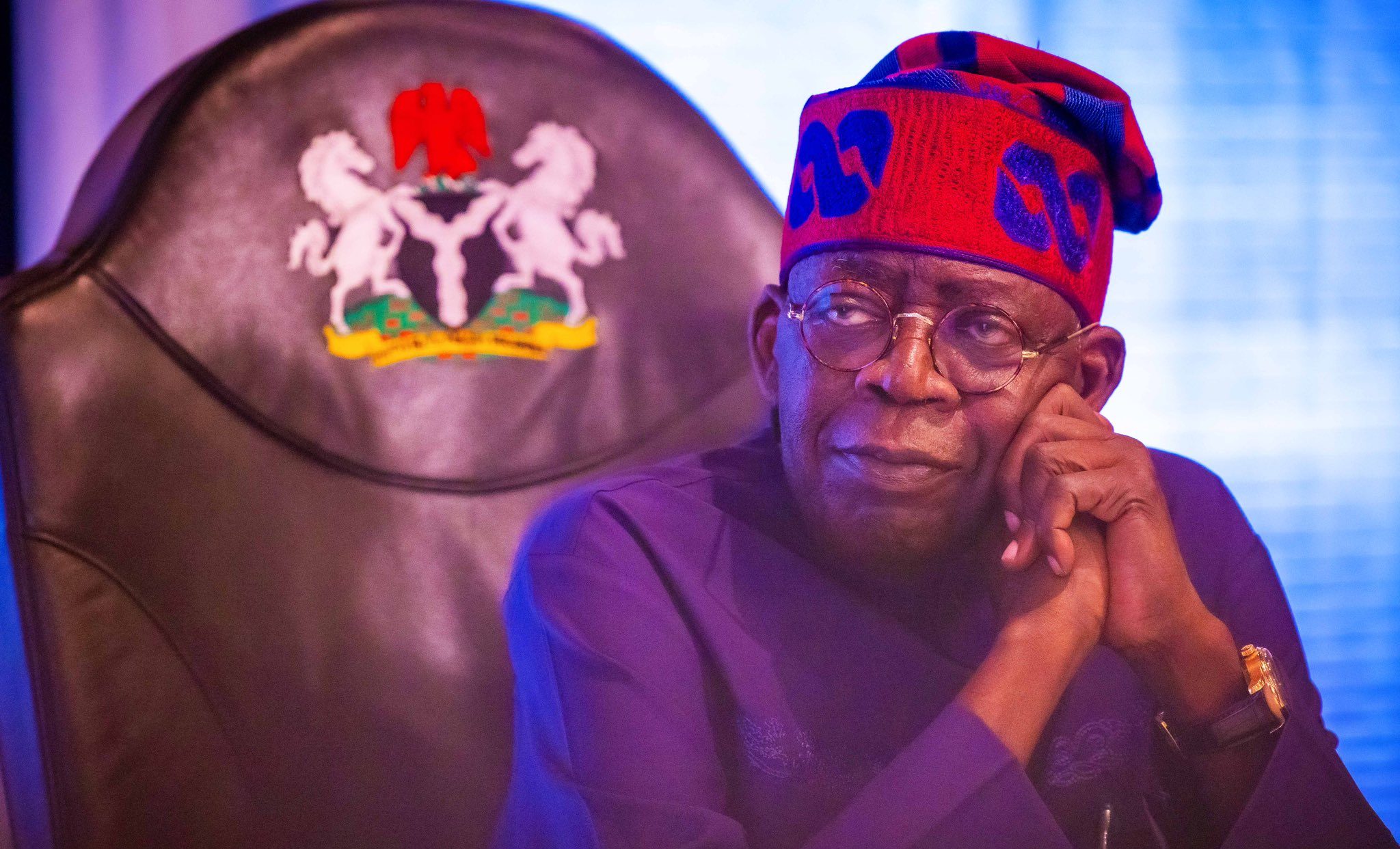
I tell the Ngelale story for no other reason, than to buttress an endemic and perennial problem in our polity; nepotism, and cronyism. A situation where people are appointed into offices they do not merit, or are inherently unqualified for, but due to their connections with those in power. As we grapple with the challenge of corruption in our system, I equally feel, that the lack of recruitment of qualified and competent persons into positions, has led to much of the decadence in our system. In sacking the Ministry of Youth and Sports Development, after a disastrous Olympic outing in Paris, the target was to get the right caliber candidate to run the affairs of the National Sports Commission. Without due diligence and proper scouting, the president fell for the recommendations of those close to him, without subjecting their nominated candidates to proper scrutiny. Shehu Dikko and Bukola Olopade, were therefore, thrown up as chairman and director general of the National Sports Commission, respectively. A deeper probe into the sports pedigree of these two individuals, would reveal their lack of the necessary qualifications and knowledge to deliver on their mandate.
Since the advent of the current democratic dispensation in 1999, a group of incompetent politicians have had the honor of being sports ministers, not a single one had ever been an athlete or a sports administrator. This is one major reason why Nigerian sports is currently in the doldrums. It was believed, therefore, that President Tinubu would correct that error in reverting to the NSC. Unfortunately, however, the problem persists. The criteria applied by the president in appointing Dikko and Olopade is that they were sports administrators, but when stakeholders propose that professionals should run sports, they are talking about retired elite athletes, who had represented Nigeria at the highest levels of sports, and who know the requirements for nurturing and grooming athletes. These persons from being elite athletes, have equally built a network within the international sports ecosystem that could be called upon when needed. When people like Dikko and Olopade occupy these offices, it speaks to the fact that they are politically connected, but at the critical level, they lack the requisite knowledge, and connections, because they lack a sporting background.
They were never sportsmen, they never represented Nigeria at any event or at any competition, they simply gate crashed into sports administration due to their connections. Like Ajuri Ngelale, their lack of the requisite sporting knowledge is manifesting in their jobs. In their thinking, political alignments and media presence is equal to doing well. That is why Dikko has aligned himself with a very powerful female personality in President Tinubu’s administration, while Olopade has been using Yoruba parapo as his claim to fame. After I did a report on their failings last week, Olopade has been singing the praises of the First Lady, Mrs. Oluremi Tinubu in the media, as a way to shore up his position. The media has been a veritable avenue for them to impress the president that all is well with Nigerian sports. As I write, Nigeria lacks a FIFA standard stadium where the Super Eagles and the Super Falcons can host international matches, except for the Godswill Akpabio stadium in Uyo. Nigeria currently lacks a functional Olympic standard stadium, that is fully equipped with the venues for most Olympic sports. The MKO Abiola National Stadium, Abuja, is a shadow of its old self, while the National Stadium in Surulere, Lagos, has been abandoned for years. How does Nigeria hope to compete on equal terms with countries like Morocco, Egypt, and South Africa, who boast of multiple functional Olympic standard sports facilities?
Despite these systemic shortcomings, Dikko and Olopade keep saying ‘all correct, Sir,’ to Mr. President, in typical Nigerian eye service fashion, in order to keep their jobs, as against telling the president the brutal truth. As of now, Nigerian sports is simply propelled by the individual brilliance and self-determination of Nigerian athletes. Oluwatobi Amusan, Ese Brume, Favor Ofili, the Super Falcons, and the D’Tigress, have all succeeded because of the individual commitment of the athletes and their coaches, what we call the ‘Nigerian spirit.’ Their successes are not due to any systemic or national blueprint for sports excellence. This imbalance, is what I believe the National Sports Commission was brought in to correct. Unfortunately, however, what has happened since the inception of the Dikko led NSC, portends no light at the end of the tunnel. Dikko and Olopade are depending on poorly paid Nigerian sports journalists to do image laundering for them, by writing public relations stories that present them as hardworking officials. A token inclusion in their entourage to sporting meets, within or outside Nigeria, or a few crumbs from their leftovers, becomes the reward for these journalists. One fact remains clear, however; after all the public relations stories, and the well orchestrated media hype, what happens to Nigerian sports? How far have Dikko and Olopade moved the sports development needle since their appointments? What has happened differently under Dikko and Olopade, as opposed to the defunct ministry of sports? These are pertinent questions that require answers.
What Nigerians expect from an agency like the National Sports Commission, are ideas, positions, vision, and direction. It is not a place for persons connected with the president or recommended by his friends and political associates. It is a place for qualified competent men and women, retired athletes, and persons who know what it takes to make sacrifices for Nigeria. By rewarding the Super Eagles, the Super Falcons, and D’Tigress, for their recent successes, it shows that President Tinubu has interest in the development of Nigerian sports. In that wise, he needs to appoint competent and tested hands to the National Sports Commission. If the president doesn’t know these hands, we take the liberty to make some impartial recommendations, and appeal to the president to thoroughly screen them to clear any doubts; Innocent Egbunike, Solomon Ogba, Segun Odegbami, Austin JJ Okocha, Fidelis Gadzama, Daniel Igali, and any other persons whom the president could identify. These former elite athletes, and successful sports administrators, if given the opportunity, would do a great job in repositioning Nigerian sports, not only for now, but for the future. Meanwhile, Dikko, who has always coveted the NFF presidency, could be given an opportunity in that area, while Olopade, could be deployed to an agency that suits his expertise.
It is important for President Tinubu to understand that sports development is not only about winning laurels in the immediate, it is about laying a foundation for sustainable success. Sports is a tool for international diplomacy, and a veritable tool for youth employment. It keeps the youths occupied and away from mischief, it gives them hope for a better tomorrow, and when they succeed, the nation benefits. The United States, Australia, Canada, and the UK, are sports powerhouses, they understand the value of sports as a tool for international diplomacy and influence. In Africa, Egypt, Kenya, South Africa, and now Morocco, are always doing well, these are as a result of the foundations laid by these nations over the years. Morocco and South Africa have been hosting different international sports events in recent times, and representing the African continent in that regards. Why is Nigeria sleeping? It is time to wake up, and we could start by the appointment of the right and proper people to head and run the National Sports Commission.