Ernest Osogbue.
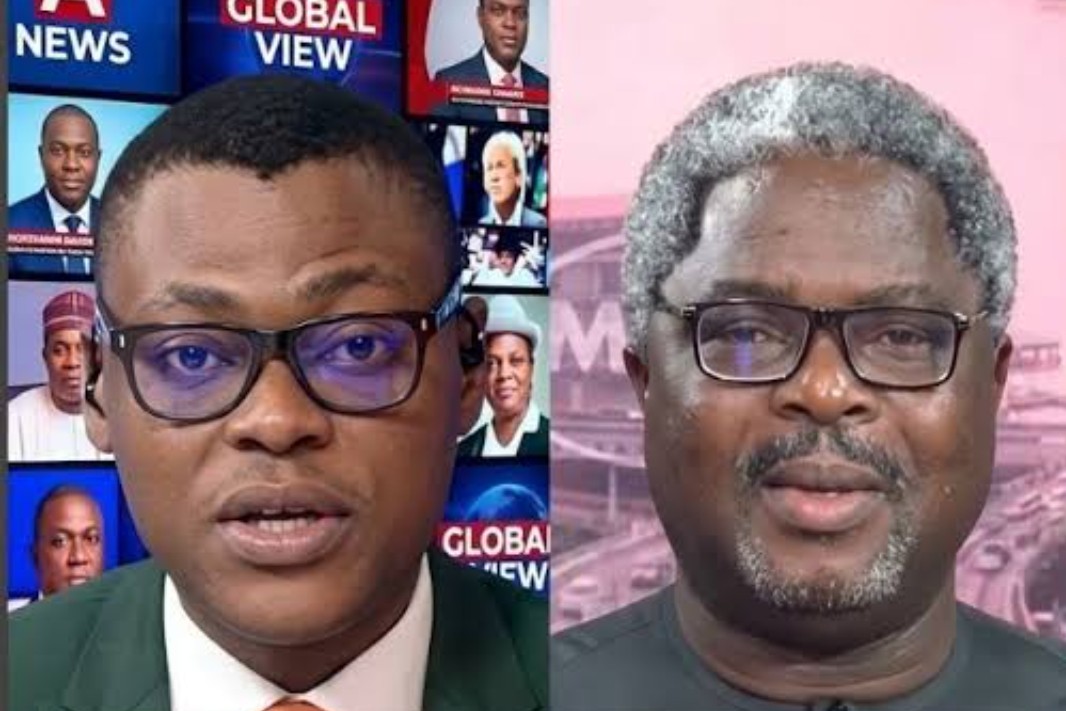
I’ll begin by commending the entire Arise morning show team, for raising the bar of political discourse in our country. I must confess that before Arise came on the scene, what we had was mostly endorsement interviews, political appearances, and media pampering of political actors. Today, public officers prepare for media appearances, knowing that they could be taken to task on their stewardship. All these are due, thanks to the Arise News Channel. On the matter that transpired between Lere Olayinka, and Rufai Oseni on the show, sometimes ago, I expected more senior broadcast journalists to lend their voices to the debate. Unfortunately, however, and perhaps due to the uncertainty of public reaction, and to avoid being unnecessarily dragged by non-professionals, most of them opted to remain silent. Majority of the responses I read were mostly from our print colleagues, who may not understand the totality of the situation. That in no way discounts their opinions, but only to lay emphasis on those whom the shoe pinches the more.
Tonnie Iredia, the former Director General of NTA, put out his position, which was commendable. Off the bat, I must state that four broadcasters have mostly shaped my approach to television and radio interviews, as I mostly watched them, and read their books as I grew in the industry; Jim Lehrer, Sir David Frost, Larry King, and of course Oprah Winfrey. These four broadcasters, helped to shape the media landscape around the world today. they reshaped their country through their style of asking questions, and by extension, they impacted how journalism is viewed and practiced around the world. Some say the landscape is changing, with the emergence of the more fiery Stephen Sackur, Zeinab Badawi, and Mehdi Hassan, but until the new yields a better result, the jury is still out.
In analyzing the Lere/Rufai saga, as I choose to call it, I would like to start with a question; beyond public enlightenment, what is the object of a media interview, in Nigeria, especially of public officials? Most people would say ‘to hold them to account,’ and I would not argue with that. However, how does the media hold officials to account, when it lacks the power of summons, arrest, detention, or prosecution? While the media could investigate, that power is grossly limited in relation to that of the police and other statutory bodies. An Investigative journalist mostly operates on his own, without state cover. Many have lost their lives. How safe is a journalist investigating the army or the police? It follows, therefore, that the media’s power is not absolute. It is what I call soft power, which the first set of names above, used effectively to influence policy in their countries and around the world. As the fourth estate of the realm, which lacks enforcement powers, the ultimate objective of the media, therefore, is to influence policy. The media wants people in authority to do better for the citizens.
The world is in a constant state of flux; young people desire quick and instant results, while their parents are a bit more patient. My first group of names understood the limitations of the media, and so, effectively used their soft power. The second set is more interested in instant results; expose him now, catch him, disgrace him. As a young man, I greatly admired Malcolm X and his vibrant approach to civil liberties in the US. Martin Luther King (MLK) Junior, his contemporary, was less fiery in his approach. MLK, desired behavioral and attitudinal changes over the long term, while X, was more interested in instant results, guided by his popular maxim, ‘by any means necessary.’ Long after their passing today, the legacies of MLK, stand more visible than those of Malcolm X. This proves to an extent, that subtlety trumps quickfire results in long term impact. To me, Rufai Oseni, represents the young, angry and impatient Nigerians, currently frustrated by the corruption and slow pace of development in our country, and who want changes as early as yesterday. There is absolutely nothing wrong with that. The problem however, is that reality does not operate as such, it does not provide overnight solutions, it is slow and tedious.
With the above in mind, it becomes important, to point out, that an interview may generate viewership for a media house, excite young people, and generate social media engagements, but if it fails to shift policy in favor of the masses, then it has not succeeded in its ultimate objective. I saw President Tinubu on television recently, and heard him clearly commending Olusegun Adeniyi of Thisday Newspapers, for a well researched and critical article on security. I haven’t read the article, but President Tinubu tacitly admitted that he would take a few nuggets from Adeniyi’s article and incorporate them into national policy. That I believe, is the ultimate target of the media, and the most valuable crown a journalist can wear; the ability to influence policies.
During an interview, there are at least two persons; the guest and the host, or interviewer, and neither should feel more important than the other. President Obasanjo was on a comedy show called ‘Curiosity made me ask,’ recently, and outside of being impressed with his humility, he said something profound. When his young host said ‘this is my platform,’ our wily old former president was quick to remind him, that it was now a shared platform, because he came on the show by invitation. This is very significant, because guests do not just turn up at interviews, they must be invited. It follows therefore, that a guest deserves courtesy, and shares the platform, with the host equally, as they give and take from each other. Nigerians should understand that the media lacks the power to force public officials to an interview, they come by choice.
I have produced and conducted numerous radio and television interviews in my career, and I know the challenges of inviting guests for a show. Not everyone is willing to come, and you can not compel them. Sometimes a guest could disappoint at the last minute, and you start scratching your head. In fact, it is not a crime for a public official not to attend an interview. It is therefore, very important to treat those who respond to our invitations with respect. I once worked with a very senior government official, as a media aide. She never once attended a media interview, despite all my efforts, not because she was afraid, but because she distrusts the media. She believes that the media scapegoats public officials, distorts facts, and is only interested in pulling people down. If all public officials felt this way about the media, then we shall soon all be out of a job. It becomes important therefore, to accord respect to those who honor our invitations and treat them with courtesy, irrespective of whether we ask them tough questions or not.
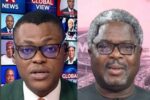
On the Lere/Rufai interview, however, I must state clearly that Lere came on that show with an agenda, I have no doubts about that. Having been a recipient of Rufai’s aggressive and fiery interrogation, which he may have resented, and coupled with Rufai’s regular uncomplementary remarks about his boss, Nyesom Wike, Lere came prepared to get his pound of flesh, hence his comments, and refusal to take questions from Rufai. This was a deliberate attempt to divide the host team, and humiliate a perceived ‘enemy.’
While Lere was wrong in doing what he did, and I’m sure he would admit that much himself, it is also possible to say that his actions are understandable. Why? This is because a media platform is not a courtroom, it is not a platform to prosecute or persecute public officials and find them guilty. it is a place to ask questions on behalf of the people. Looking for a ‘gotcha’ moment, is not the essence of an interview, neither is it a platform to pander to partisan interests. It is a time to hold brief on behalf of the people. The best host or interviewer therefore, is the one who detaches himself from the question, and earns the trust, and respect, of both sides to the issue. When one side perceives bias on the part of the host, and sees the interview as an agenda against him, then there is a problem. This is what played out between Rufai, and Lere.
A good interviewer makes it clear there is nothing personal against the guest. This is where, I believe that Rufai’s approach, requires adjustments. He most often than not, injects himself into the conversation, and makes it personal. His interviews come across as a personal combat, as if the guest offended him personally. The legal maxim nemo judex in causa sua which translates; no man can be judge in his own case, becomes relevent here. You can not invite guests, ask them questions, then shout them down, and prevent them from answering. This would definitely trigger a reaction. While I will not go as far as to say it is improper, I would advise that we tone down our passion. Almost all Nigerians are frustrated with happenings in our country, but we can not go around quarreling and fighting on television. The interview must never get out of control and become rowdy. While many ordinary Nigerians commend Rufai’s bold approach, which is alright. I see it as akin to commending a police officer for torturing an unconvicted criminal. While it may seem emotionally appealing, and satisfying, it is ultimately illegal. We must understand that the real media heros are those who succeed in influencing policies that favor the masses. Shouting at, accusing, and quarreling with public officials during interviews, may earn us emotional satisfaction and public adulation, but our true value can only be measured by how much we influenced policies that transformed the lives of the downtrodden.
Lere came to deliberately embarrass Rufai and the Arise News Channel. I must commend the lady Ese, for her perfect handling of a potentially awkward situation. But in the long run, it is important for us to take notice of the similarities between what Lere Olayinka did, and what President Donald Trump recently did. Trump banned CNN, Politico, and MS Now, from covering the White House. Just like Lere, President Trump felt unfairly treated by these media houses, and retaliated against them, despite knowing it is unlawful. The Trump camp believes that CNN and the rest, have consistently and constantly failed to give the Trump administration a fair shake. It has been criticize, criticize, condemn, condemn, and never seeing anything good. As one of my professors once said, nothing is all bad, and nothing is all good. A journalist should find something to commend before criticizing. In the quest to hold public officials accountable, we must not be overly negative, we must find a middle ground which presents us fairly to all. When the perception exists and persists of a personal agenda, then such reactions from Lere and President Trump, could result. As much as citizens deserve fair treatment, government officials on an interview, equally deserve fairness from the media. According to Dale Carnegie, in his 1936 book, How to win Friends and Influence People, you must commend before you condemn. Always seeing the failures and ignoring the successes, would never give us the opportunity to influence policies.
In the final analysis, both Lere and Rufai were wrong. Rufai, more so, being the supposed professional, and the host. He has the power to control the environment of any interview. Difficult questions could be asked gently. Like one of my broadcast teachers said years ago, a bitter pill could be wrapped in honey. Incidentally, Charles Aniagolu, Rufai’s colleague at the Arise News Channel, is a master of that art; Charles has the canny ability to ask difficult questions and make them sound friendly. Rufai could do well to borrow a leaf from Aniagolu’s book on how to hold government officials accountable, without turning an interview into a personality clash, or a battle of egos.