Ernest Osogbue.
I know the story of a man who sacrificed everything to send his son to Germany, after he gained admission into an Ivy League university in that country. The man was doing fine when the young man secured the admission, however, due to Covid-19, and the challenges associated with it, the admission was deferred for some time, and by the time school resumed, things were not as rosy for the man. By sheer determination, however, he was able to raise the thousands of Euros required to register his son in school, and to complete his entire course of study. When they arrived in Germany, the man could not afford a hotel and was forced to sleep on the streets in winter, when it was deathly cold. When he arrived back in Nigeria, it was touch and go for a time, as he almost lost his life from the adverse effects of his German sojourn.
The son has graduated now, he did so well that he was offered employment even before graduating. When the man recently asked for a little help from his son, the boy gave different excuses and refused to help his father. I also know of a man, who was childhood sweethearts with his wife; they had met in Lagos when they were still very young. As their relationship developed and the woman needed a job, the man through friends got her a position in one of the lucrative public corporations in Nigeria. Later, the corporations headquarters had to move to Abuja, and the woman didn’t have any one in Abuja. Facing the prospect of losing the opportunity, she appealed to the man who had a brother in Abuja, to allow her stay with him, even though they were not married. After thinking it through, the man was compelled to accede to this demand. The man later asked for a transfer to Abuja, and they got married along the way. Now, however, their marriage has broken up, because the woman who’s still working in that office, feels she’s doing better than her husband and became disrespectful and uncompromising. She has simply forgotten how she got to her position.
The above two stories demonstrate a recent trend in the world where people no longer remember their beginnings. There are several stories trending on social media of married Nigerians abroad killing each other over property, after one or the other, of the husband or wife had brought the other to Europe or America. Stories equally abound of families splitting due to arguments over inheritance; mothers hating their children, children despising their parents, and so on.
For those born in the 1960’s and 1970’s, and those born before then, but grew up under the military governments of General Yakubu Gowon, General Muritala Mohammed, General Olusegun Obasanjo, and then the democratic government of Alhaji Shehu Shagari, apartheid and the liberation struggles in South Africa, was a very audible soundtrack in their upbringing. All you heard government officials talk about then, was that Africa is the centerpiece of Nigeria’s foreign policy. Arming the African National Congress, ANC, supporting the liberation struggle, and pouring millions of dollars into the fight against apartheid was a non-negotiable point with all the above regimes in Nigeria. General Mohammadu Buhari, and General Ibrahim Babangida, picked up from where the other regimes left off, until apartheid was defeated in the early 1990’s.
Nigeria stood shoulder to shoulder with all the liberation struggles in Southern Africa; in Angola, Namibia, and several other countries in that region. Murtala Mohammed’s decisive support for the South West African Peoples Organization, SWAPO, in Angola, was crucial in the swift liberation of that country. The emergence of Sam Nujoma in Namibia, owes much to the support of different Nigerian governments. Many of the early politicians and liberation fighters in the entire Southern Africa, owe their education to the efforts of Nigerians and the Nigerian government. Scholarships were awarded to South Africans without discrimination. Nigerian students were encouraged to donate their luch money to fund the struggles in South Africa. It got to the extent that Nigeria was named a Frontline State, that is; a country directly impacted by the activities of the apartheid regime in South Africa, due to geographical proximity. This was very significant, because Nigeria is in West Africa, and nowhere near the conflict zone, but due to the amount of support she was giving to the struggle, the designation was well deserved.
Due to the activities of the government, Nigerians on their own, bought into the struggle so much so, that Nigerian musicians were waxing records about the liberation movement. Sonny Okosuns, Fire in Soweto , opened the doors, as the late singer painted a picture of innocent children getting mowed down by the guns of apartheid. He followed it up with a more fiery Papa’s Land , in which he was no longer mourning, but demanding that Africans must rule Africa. Okosuns was really prolific in his protest music, with a repertoire that included Holy Wars, Revolution, Give Power to the People, etc. He was designated a freedom fighter, by the simple fact of his protest and anti-apartheid songs. He was to be declared persona non grata, in South Africa, during the apartheid era, as his songs were deemed to rouse the people to violence. Chris Hanen, the Ozigizaga singer, was to come up with his own liberation song, Mandela. You could hear him shout, Africans are saying, stop this apartheid, the whole world is saying, free Nelson Mandela. Oh yes! Liberate South Africa, now! Onyeka Onwenu, in order to demonstrate her feminine inclination, decided to take a different path. Rather than sing about Mandela, she focused on the wife he left behind for almost 30 years, and who was left to carry the liberation torch on his behalf. In her song, Winnie Mandela , Onwenu sings; Winnie, Winnie Mandela, mother of a nation, crying to be free! In a more fiery rendition, my good friend, Ras Kimono, sang , Kill Apartheid; Kill apartheid we are go kill apartheid, kill apartheid we are fit kill apartheid … Majek Fashek, also added his voice to the calls for a free South Africa, in his song, Free Mandela, where he called on Frederik de Klerk to free Nelson Mandela. Majek sang; Na na na na, Frederik de Klerk, eh eh eh, free Mandela!
It remains pertinent that almost all of us Nigerians of that time, were involved in the fight against apartheid. Either emotionally or spiritually, we were all involved. I remember President Olusegun Obasanjo, saying one time, that Africans may need to use fetish means (juju) to fight apartheid. This was after he had relinquished power in 1979, as military head of state, and before being elected president in 1999. The Nigerian government equally took decisions that impacted citizens adversely. For example, Nigeria boycotted the 1976 Olympic Games in Montreal, Canada, along with other African countries, following protests over the All Blacks of New Zealand tour of South Africa. Nigeria equally boycotted the 1978 Commonwealth Games, in protest, over apartheid in South Africa. In each of these and other cases, Nigerian athletes who had sweated and spilled blood to qualify for the Games, were denied those opportunities because of South Africa. In social life, apartheid was in our faces everywhere you looked. Popular television dramas of the 1970’s and 1980’s, like Masquerade, Village Headmaster, Hotel de Jordan, and others, found a way to incorporate apartheid in their storylines, to ensure that all Nigerians were conscious of the injustice going on in South Africa. These television shows made it so acute, that the South African fight became the fight of every Nigerian.
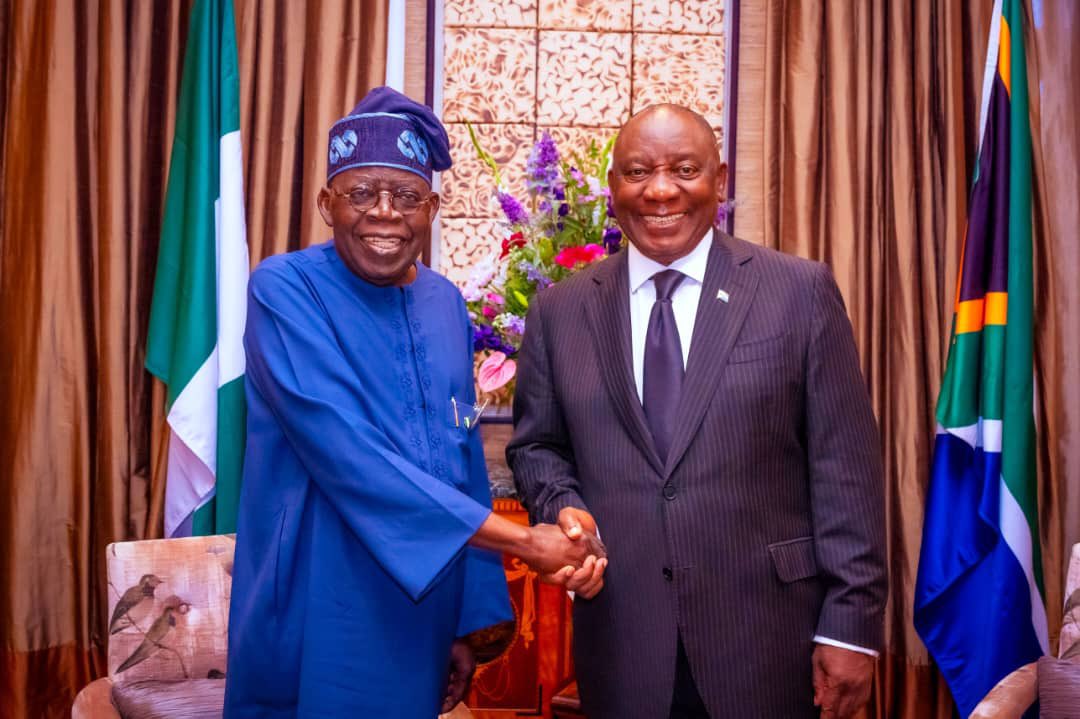
Fast forward to the presnt, and young South Africans are baying for the blood of Nigerians and other Africans, over access to menial jobs in their country. Many Nigerians have lost their lives over the wanton xenophobic attacks, businesses have been lost to arson, and lives will never be the same again. It is quite obvious that the history of how South Africans came to be enjoying the current freedom they have in their country, is not being taught in their schools. The most chilling experience for me, was when I stumbled on a documentary on the history channel, sometimes ago, and heard young South Africans, criticizing Nelson Mandela, for not doing enough. I was shocked to the marrow. I couldn’t believe my ears; a man man who sacrificed everything, including his youth, did not do enough, what else should Mandela have done? Since watching that documentary, I have realized that man’s memory is very short. The person you assist today, may likely not recall it tomorrow. Some people have opined that South Africans owe Nigerians no obligations, I agree, but is it proper to kill, burn, and loot the properties of a fellow African, whose country and people risked everything for the freedom you currently enjoy?
It is not just about South Africans, it has become obvious in the world we live, that one’s children could easily forget the sacrifices made by their parents in their upbringing. Children disobey their parents, go against their wishes, and claim it is their life. There’s no more a guarantee that the child you gave birth to, nurtured, and trained, will grow up to honor you. Children grow up to live their own lives and sometimes abandon their parents, without care. It has become obvious, therefore, that we must not always expect a positive payback from those we help, and even the children we groom. As we help others, let’s remember to also be helping ourselves by doing those things that would make us not require the assistance of those we previously helped. The world is changing so fast that people forget events almost as soon as they occur. Social media is teaching children different things from what their parents teach them. Let us therefore learn to depend on ourselves. As we criticize South Africans and the South African government, let Nigerian leaders also learn to do the right things by developing our country. If Nigeria were comfortable and conducive for living, the millions of Nigerians being harassed in different African, European, and North American countries, would be home and contributing to national development. So, we call on our leaders, like Majek Fashek did to South African leaders; free Nigeria!